
05 / Component
What are co-packaged optics?
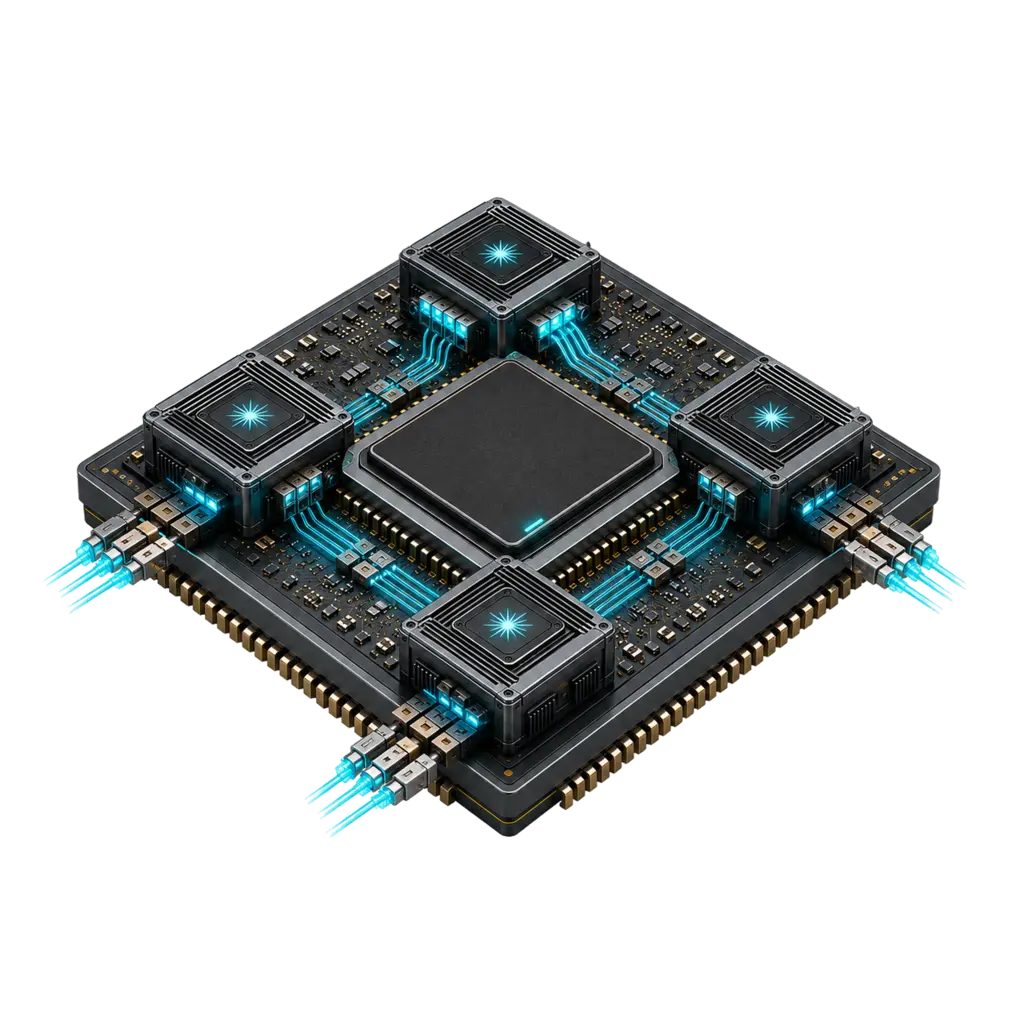
An arrangement that moves the optical engines out of a pluggable module and onto the same package as the switch chip, so electrical signals travel millimetres instead of centimetres.
(In simple terms: the optics moved right next to the switch chip, to save power.)
Why it matters
At 1.6T and beyond, pushing electrical signals from a switch chip to a faceplate module starts to cost more power than the optics themselves. Shortening that path is one of the few remaining ways to keep switch power growth under control as bandwidth doubles.
How it works
- Optical engines are mounted on the same substrate as the switch chip.
- Light is supplied by external lasers, so the heat source sits outside the package.
- Electrical paths shrink from centimetres to millimetres, cutting drive power.
- Fibre attaches directly to the package rather than to a faceplate cage.
Inputs and outputs
- Made of
- A switch chip, optical engines, an external laser source and advanced packaging.
- Takes in
- CW lasers, switch silicon and co-packaging capacity.
- Produces
- A switch with substantially lower interconnect power per bit.
Where it gets stuck
Serviceability is the open question: a pluggable module can be swapped in seconds, and a co-packaged engine cannot. Deployment depends on packaging yield and on operators accepting the maintenance trade.
A general statement about the technology. It is not a claim about any named project — where T2C can evidence a specific delay, it appears in the intelligence ledger with its source.
Where it sits in the chain

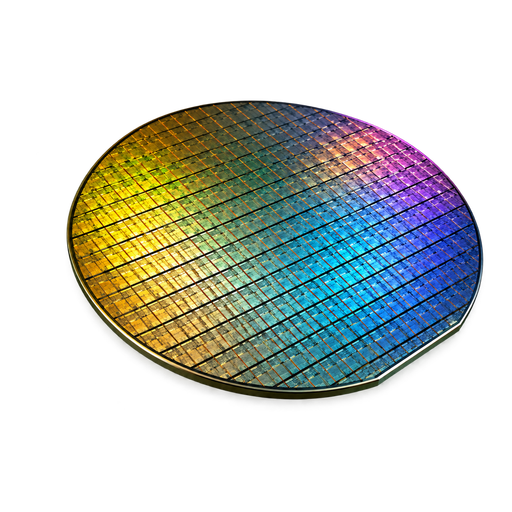
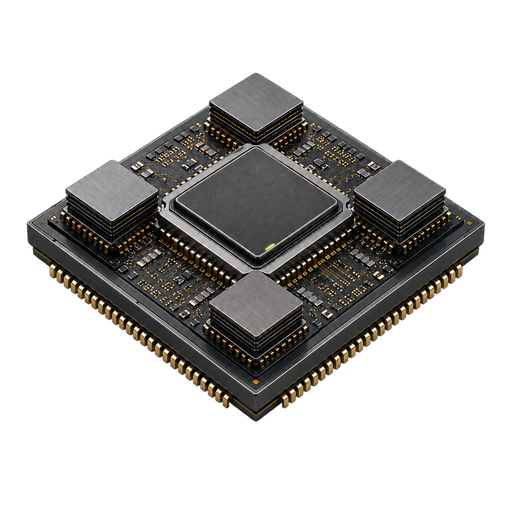
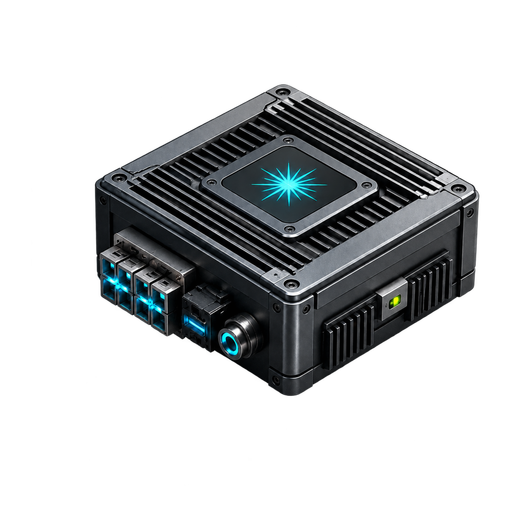



T2C tracks the delivery end of this chain. An upstream stage is shown as having happened — capacity cannot be billing unless the parts were made — and simultaneously as untracked, because no supplier, order or shipment record sits behind it.
Public companies in this area
These companies make the components this stage depends on. Except where a row states a named agreement or a disclosed order, no document links them to any operator, site or contract T2C tracks — making a component is not the same as having been awarded work, and this table never implies otherwise.
| Company | Role in the chain | What the evidence shows | Quote | Source |
|---|---|---|---|---|
| Marvell Technology NASDAQ: MRVL Co-packaged optics | Technology enabler Produces the PAM4 optical DSPs that let a transceiver push 1.6 terabits down a fibre pair. | Makes the component Its own product page for the Ara and Nova PAM4 DSP families, described as enabling 1.6T optical transceiver modules. Establishes capability; names no module maker as a customer. No counterparty named in the document As of 16 Aug 2026 | Not connected No market-data provider is configured. T2C never prints a stored price. | Marvell Technology, Inc. |
| Fabrinet NYSE: FN Co-packaged optics | Contract manufacturer Provides advanced optical packaging and precision manufacturing for optical components and modules designed by others. | Makes the component Its FY2025 results, which describe the business as advanced optical packaging and precision manufacturing services to OEMs. Establishes the business model; names no optical customer. No counterparty named in the document As of 27 Jun 2025 | Not connected No market-data provider is configured. T2C never prints a stored price. | Fabrinet |
Glossary
Every term that appears above, defined. Each opens in place.
-
How much data can move at once.
bandwidth
The volume of data a link can carry per second. Distinct from latency, which is how long a single message takes to arrive. A cluster can have ample bandwidth and still be slowed by latency, and the reverse.