
04 / Chain stage
What is photonics?
The use of light rather than electrical current to move information, so that thousands of accelerators spread across a building can behave as one machine.
(In simple terms: it replaces electrical data movement with beams of light.)
Why AI needs it
A frontier model does not fit on one accelerator, so it is split across thousands, and every training step requires them to exchange results. Copper cannot carry that much data far enough without unacceptable loss and heat. AI clusters have become communication systems as much as computing ones, and light is what makes the communication possible.
What it is made of
Each part below has its own page. They are links, not pop-ups — a component you can read about only in a tooltip is a dead end.
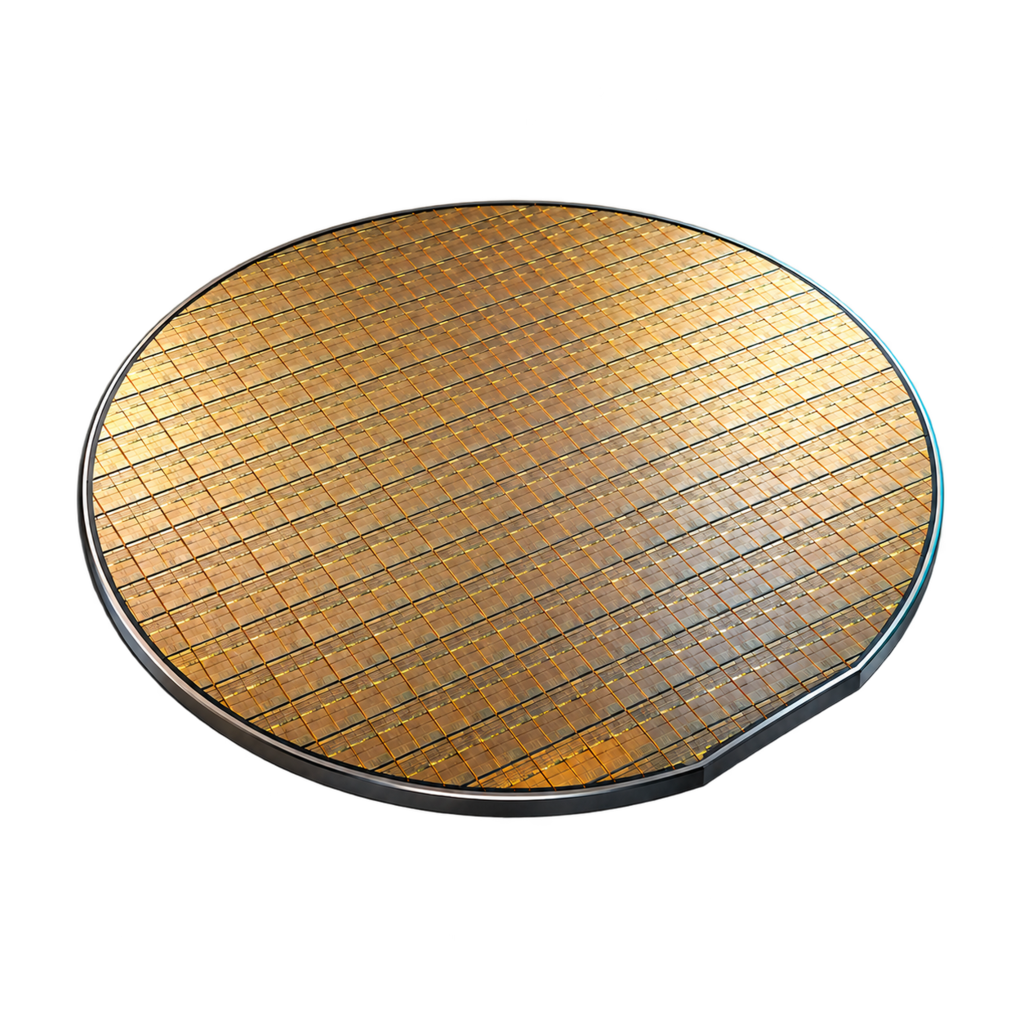
- InP substrate the specialist disc that optical lasers are built on What is this?
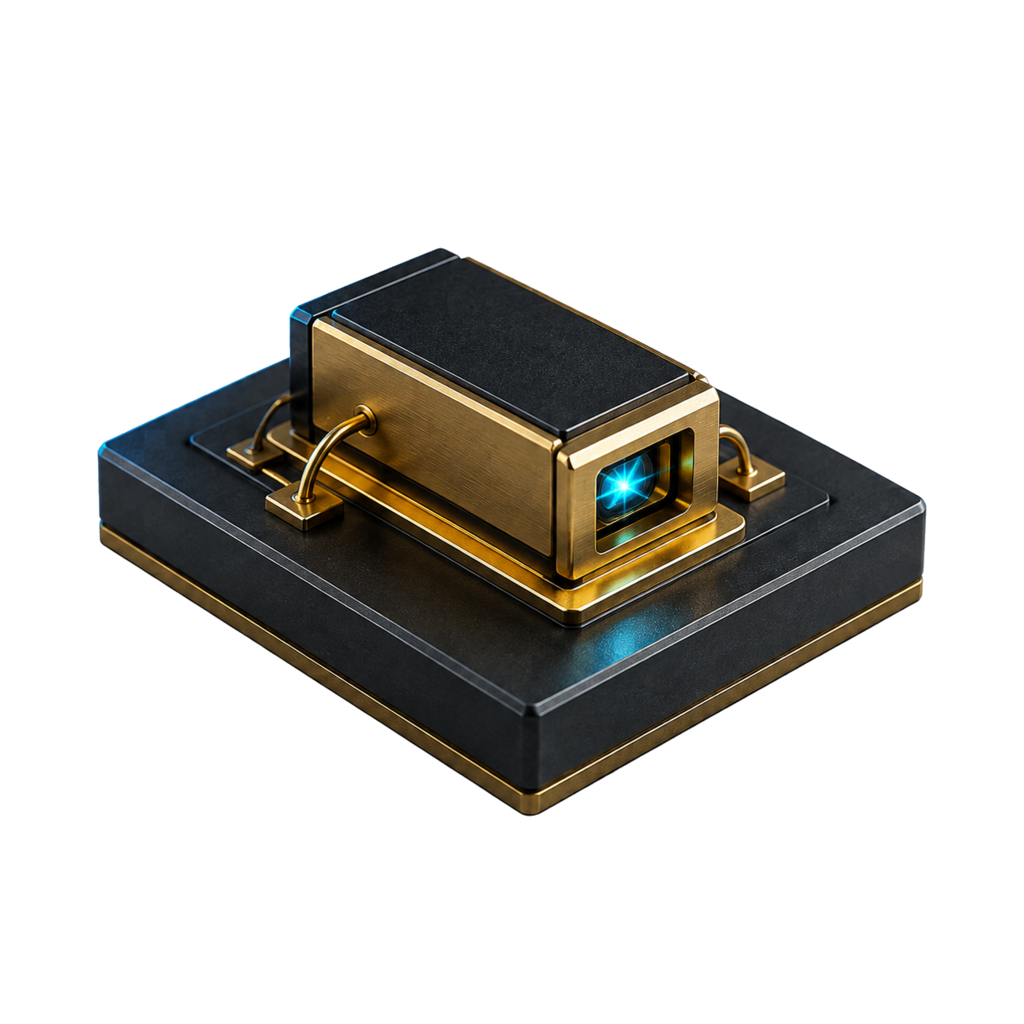
- CW laser a steady light source, switched into data further down the line What is this?
- EML a laser that writes the data onto its own beam What is this?
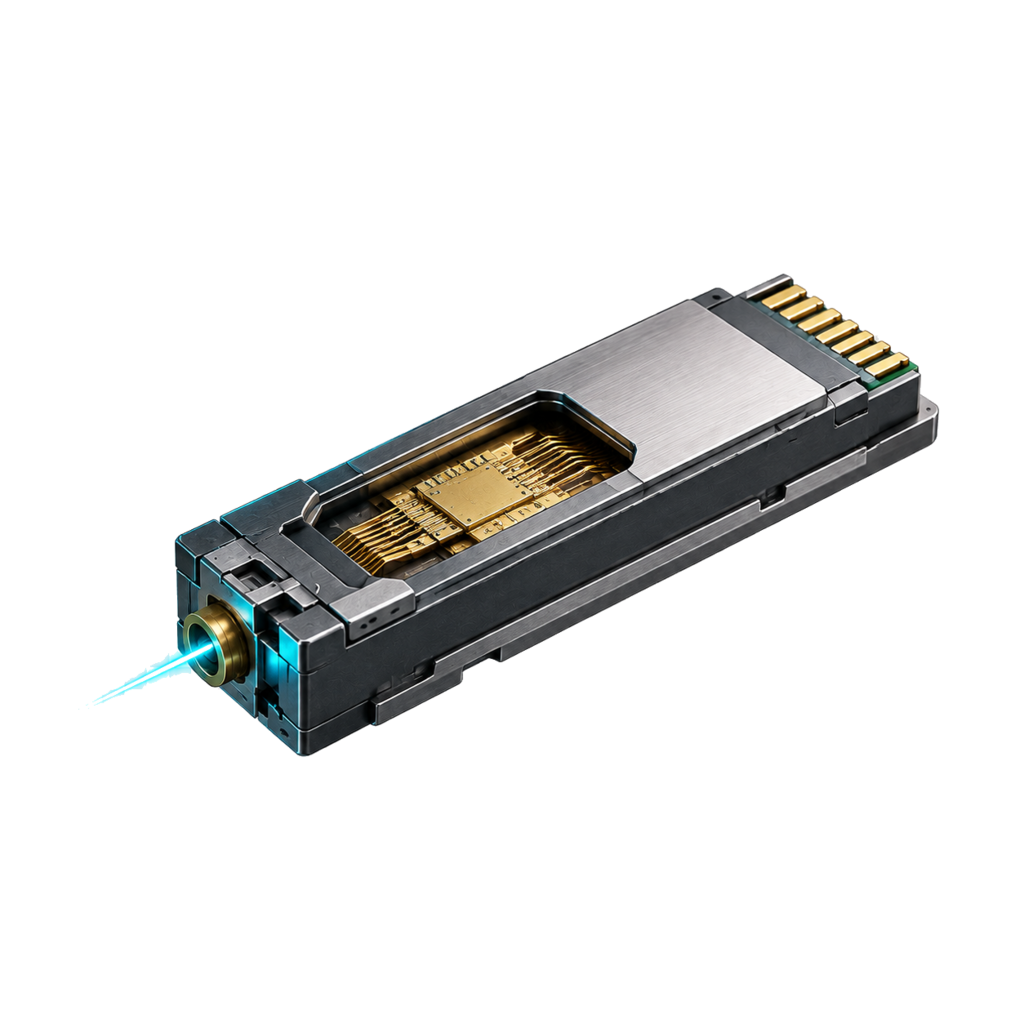
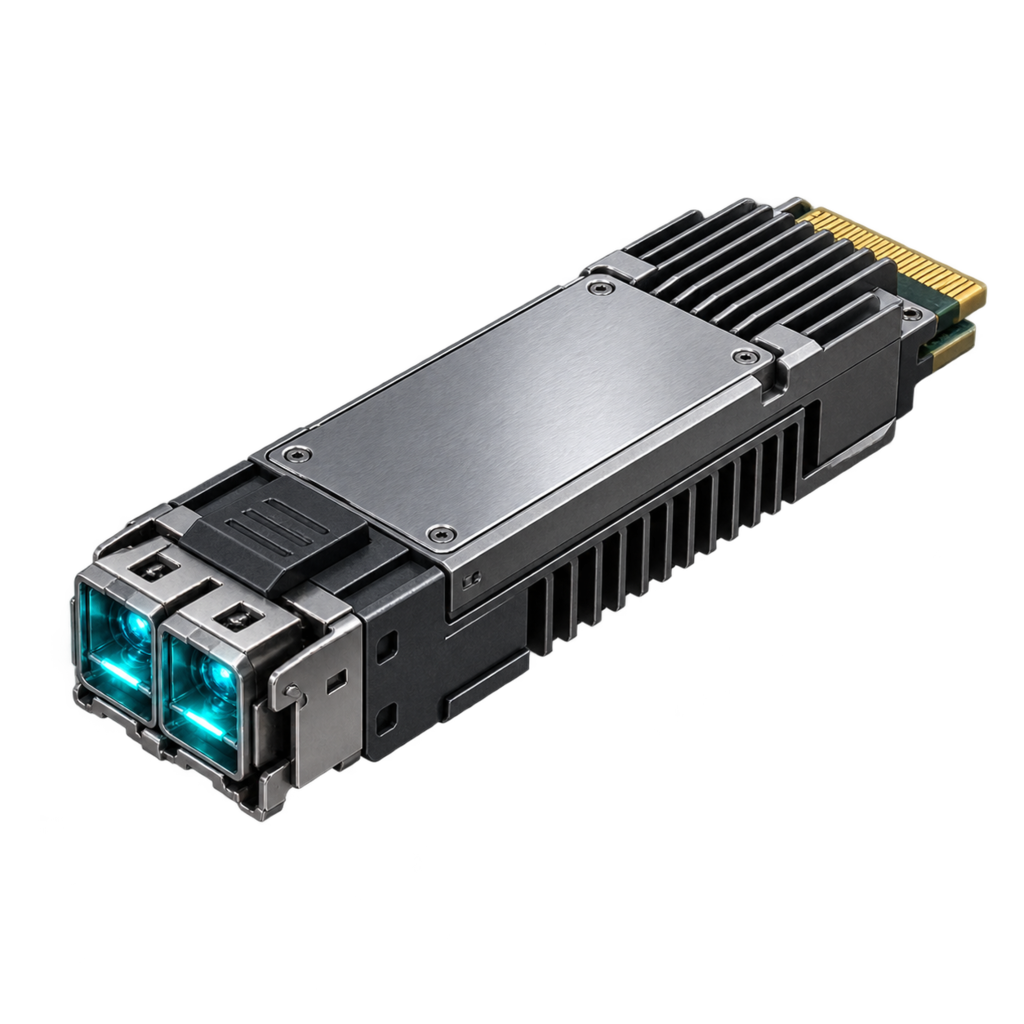
- 1.6T transceiver the plug that turns electricity into light and back What is this?
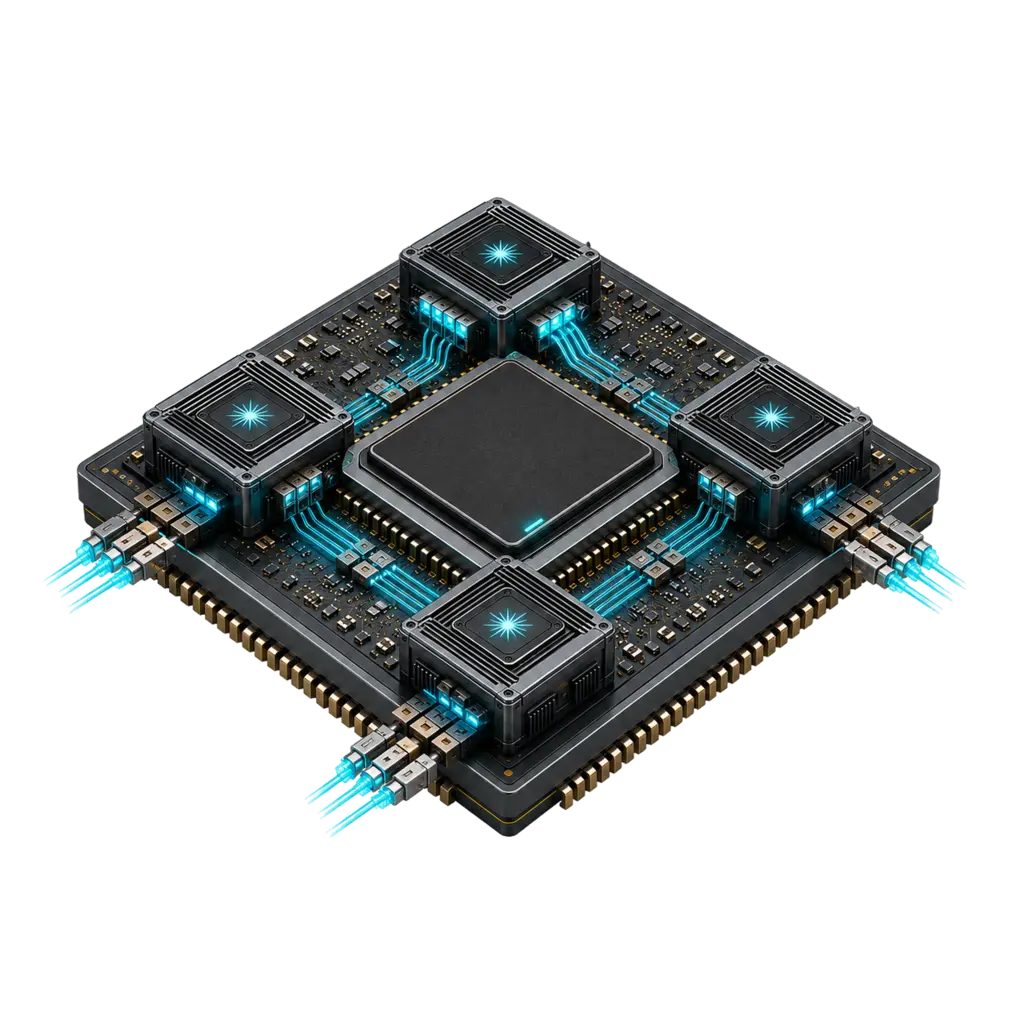
- Co-packaged optics the optics moved right next to the switch chip, to save power What is this?
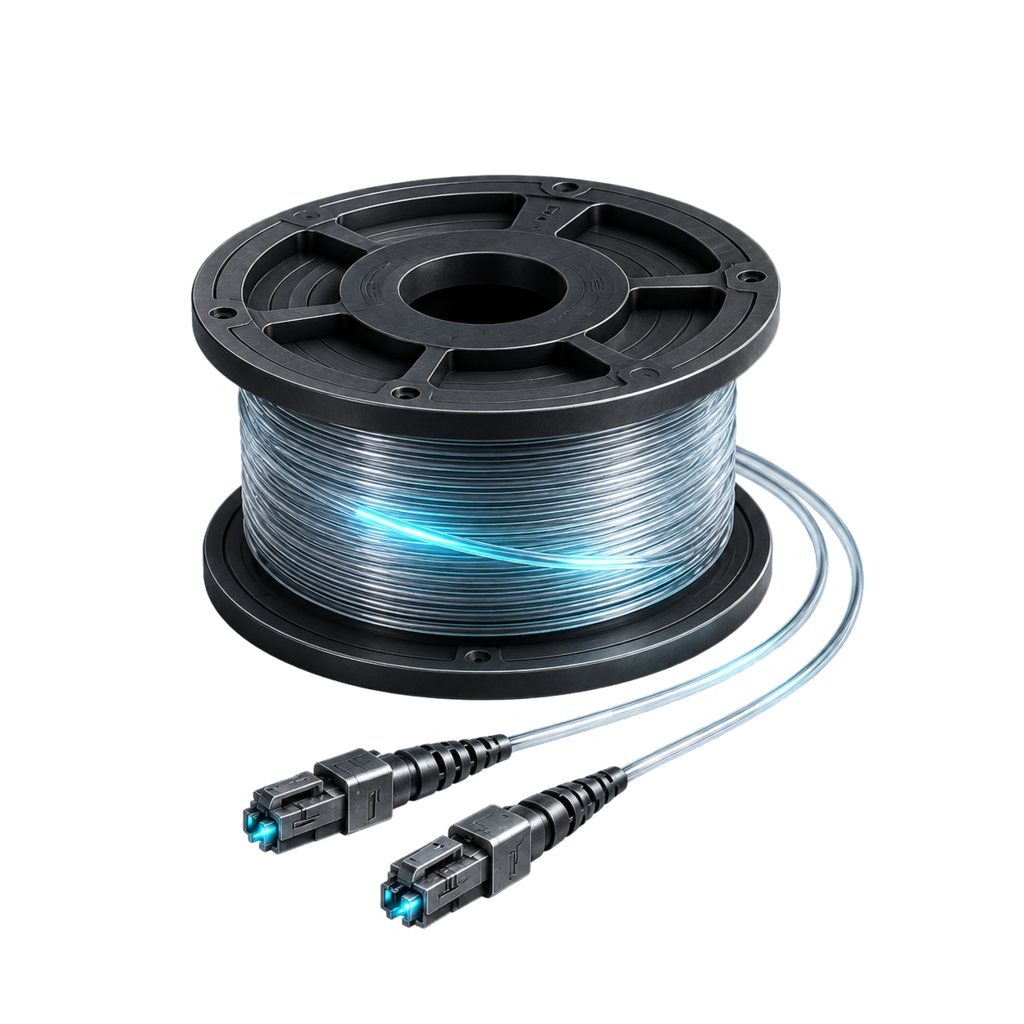
- Optical fibre the glass pathway the light actually travels down What is this?
How it works
- A laser produces a steady beam of light at a precise wavelength.
- A modulator switches that beam on and off billions of times a second, encoding the data.
- The light travels down a glass fibre to a switch, losing very little energy on the way.
- A receiver at the far end converts the light back into an electrical signal for the next GPU.
Inputs and outputs
- Made of
- Indium-phosphide substrates, lasers, modulators, optical engines, glass fibre and the signal processors that drive them.
- Takes in
- Compound-semiconductor substrates, lasers and signal processors.
- Produces
- Optical transceivers and the fabric that links accelerators together.
Where it gets stuck
Each generation doubles the data rate while the power budget barely moves, so optics move closer to the switch chip with every step. Laser supply and advanced optical packaging are both narrow, and a cluster cannot be commissioned until its fabric is complete.
A general statement about the technology. It is not a claim about any named project — where T2C can evidence a specific delay, it appears in the intelligence ledger with its source.
Where it sits in the chain




Who sells to whom. Optics makers sell transceivers to network and server builders.
T2C tracks the delivery end of this chain. An upstream stage is shown as having happened — capacity cannot be billing unless the parts were made — and simultaneously as untracked, because no supplier, order or shipment record sits behind it.
Public companies in this area
These companies make the components this stage depends on. Except where a row states a named agreement or a disclosed order, no document links them to any operator, site or contract T2C tracks — making a component is not the same as having been awarded work, and this table never implies otherwise.
| Company | Role in the chain | What the evidence shows | Quote | Source |
|---|---|---|---|---|
| AXT, Inc. NASDAQ: AXTI InP substrate | Material supplier Manufactures compound-semiconductor substrates, including the indium-phosphide wafers that InP lasers are grown on. | Named supply agreement Definitive supplier agreement with Lumentum running to 31 December 2031, with a reserved minimum annual commitment of indium phosphide and two $43.5m deposits applied as shipment credits. Counterparty: Lumentum As of 29 Jul 2026 | Not connected No market-data provider is configured. T2C never prints a stored price. | AXT, Inc. |
| Applied Optoelectronics NASDAQ: AAOI 1.6T transceiver | Component maker Produces data-centre optical transceivers and semiconductor lasers. | Volume order won First volume order for its 1.6T data-centre transceivers, from a long-standing customer the release describes only as a "major hyperscale customer". The order is disclosed; the buyer is not, and T2C does not guess which hyperscaler is meant. Counterparty: Withheld — "major hyperscale customer" As of 9 Mar 2026 | Not connected No market-data provider is configured. T2C never prints a stored price. | Applied Optoelectronics, Inc. |
| Coherent Corp. NYSE: COHR 1.6T transceiver · CW laser | Component maker Produces optical communication components, laser and photonic devices, and transceivers. | Demonstrated only A demonstration of 1.6T optical transceivers built on 200G VCSELs. The company showed the technology working; it did not announce a qualification, an order or a shipment, and named no customer. No counterparty named in the document As of 1 Apr 2025 | Not connected No market-data provider is configured. T2C never prints a stored price. | Coherent Corp. |
| Lumentum Holdings NASDAQ: LITE CW laser · EML | Component maker Produces indium-phosphide lasers, including electro-absorption modulated lasers for high-speed data-centre optics. | Makes the component Its own product page for a 200G PAM4 EML. Establishes that Lumentum makes EMLs. It names no customer — though AXT separately discloses supplying Lumentum, which is recorded on the substrate row above. No counterparty named in the document As of 16 Aug 2026 | Not connected No market-data provider is configured. T2C never prints a stored price. | Lumentum Holdings Inc. |
| Fabrinet NYSE: FN 1.6T transceiver · EML · Co-packaged optics | Contract manufacturer Provides advanced optical packaging and precision manufacturing for optical components and modules designed by others. | Makes the component Its FY2025 results, which describe the business as advanced optical packaging and precision manufacturing services to OEMs. Establishes the business model; names no optical customer. No counterparty named in the document As of 27 Jun 2025 | Not connected No market-data provider is configured. T2C never prints a stored price. | Fabrinet |
| Marvell Technology NASDAQ: MRVL 1.6T transceiver · Co-packaged optics | Technology enabler Produces the PAM4 optical DSPs that let a transceiver push 1.6 terabits down a fibre pair. | Makes the component Its own product page for the Ara and Nova PAM4 DSP families, described as enabling 1.6T optical transceiver modules. Establishes capability; names no module maker as a customer. No counterparty named in the document As of 16 Aug 2026 | Not connected No market-data provider is configured. T2C never prints a stored price. | Marvell Technology, Inc. |
| Corning Incorporated NYSE: GLW Optical fibre | Component maker Produces optical fibre, cable, connectors and high-density data-centre connectivity. | Makes the component Launch of GlassWorks AI Solutions, a portfolio of cable and connectivity products for the dense fibre infrastructure generative AI requires. A product launch, not an award from any named operator. No counterparty named in the document As of 27 Mar 2025 | Not connected No market-data provider is configured. T2C never prints a stored price. | Corning Incorporated |
Glossary
Every term that appears above, defined. Each opens in place.
-
The chip that cleans up the signal at each end.
DSP
A digital signal processor. In an optical module it conditions the electrical signal before transmission and reconstructs it on receipt, correcting the distortion the link introduces. Without it the higher-order modulation formats would not survive the fibre.
Related signals
T2C holds no sourced signal for Photonics. The intelligence ledger covers the delivery end of the chain — sites, acceptance and billing — so an upstream stage has nothing on file rather than something thin. Why coverage stops here